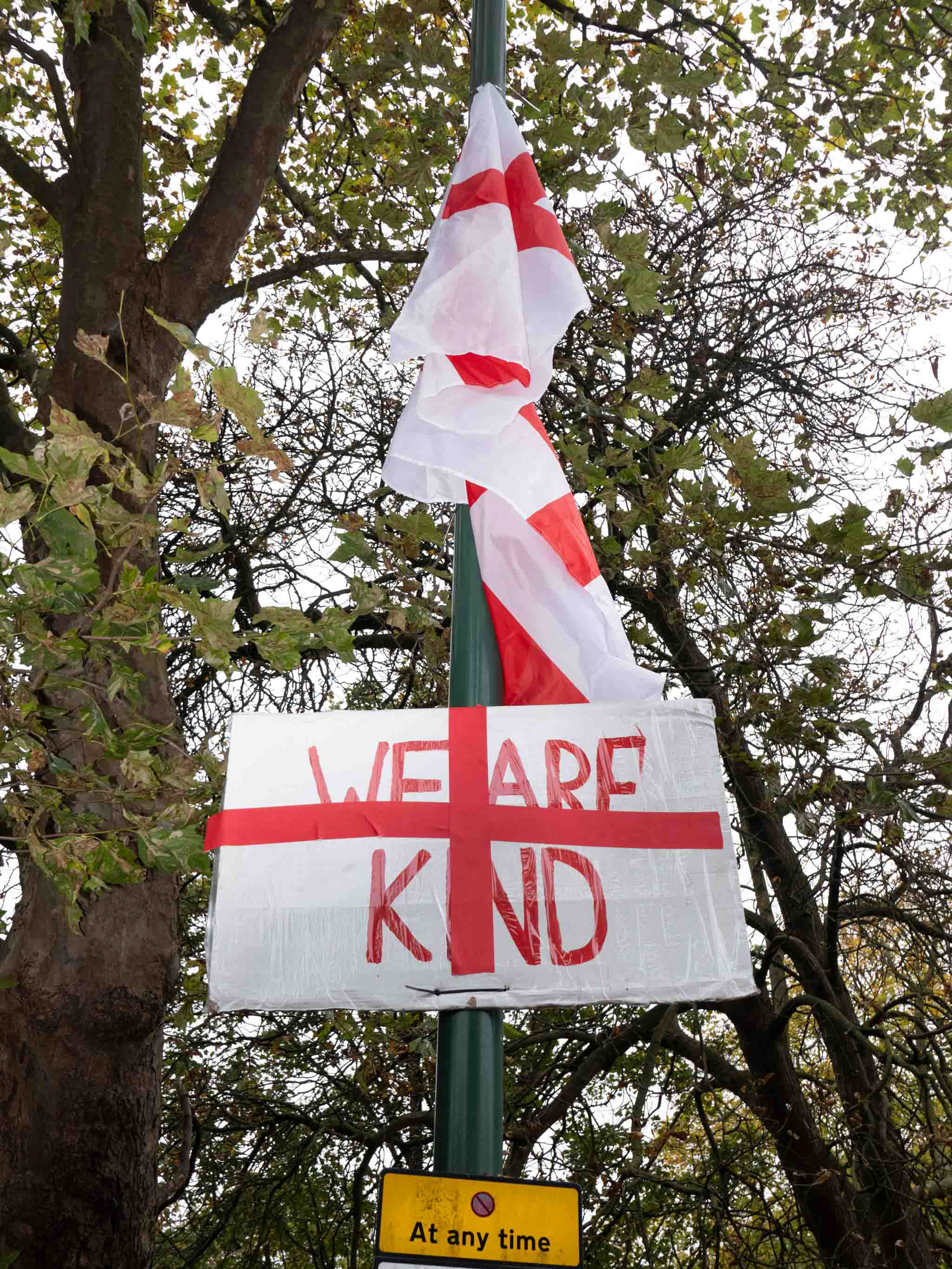
Crooked Cross, was written by the English author, Sally Carson, in the early 1930s. In it, she uses the conceit of a doomed love story to map the rise of Hitler, his fascist ideology and the way it took hold of the German people. The crooked cross of the novel’s title refers to the swastika, the symbol of Hitler’s Nazi regime. One of Carson’s central themes is how the crooked cross came to represent division, and a cult of violence that ultimately led to the Second World War and the slaughter of millions of innocent lives in the Holocaust. In the novel, Carson also describes heroic acts of resistance to Hitler as well as efforts by ordinary people to redeem symbols corrupted by the Nazi regime. Today, much closer to home than the setting for Carson’s masterpiece, another innocent symbol, that of a simple red cross on a white background, is having its meaning distorted and turned towards exclusion and intolerance. Yet, just us in Germany in the 1930s, there are those who are challenging such a narrative and trying to restore the crooked cross to the meanings of compassion, welcome, and kindness. As they and this zine hopefully show, symbols of division are not eternal. They can and must be healed through collective re-imagination if we are to avoid the mistakes of the past and live together in peace and with hope.